
Description
Species Information
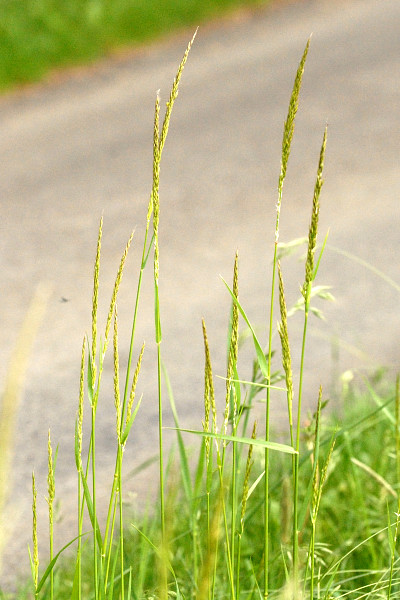
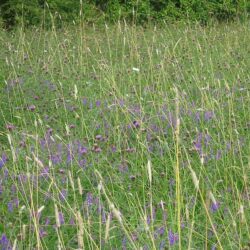
Yellow oatgrass (Trisetum flavescens) is a perennial grass forming loose tufts of soft green leaves and finely branched flowering heads. As the plant reaches its flowering time in early summer, typically from June into early July, the flower heads turn a bright golden yellow, fading to a yellowish-brown shade as seeds mature. This attractive colour change makes it a characteristic species of traditional hay meadows and calcareous grassland, where it contributes both structure and seasonal interest.
How to Identify
Yellow oatgrass is most commonly found in hay meadows, lowland pastures, roadside verges, and banks, particularly on well-drained soils. It favours areas that receive full sun, though it will also tolerate partial shade, especially in lightly grazed or traditionally managed grasslands.
The plant can be identified by its softly hairy leaves and open, finely branched flower heads with oat-like spikelets that develop a distinctive golden-yellow colour as they ripen. It is most abundant in older meadows that are cut for hay rather than intensively grazed, as it is valued for livestock and sensitive to close grazing and heavy trampling.
While it rarely dominates areas, it plays an important role in species-rich grassland communities.
How to Grow
Yellow oat-grass can be sown at any time of year when soil conditions are suitable. Due to its fine seed and relatively modest growth habit, it is usually included in seed mixtures in small proportions, particularly those designed for hay meadows, wildflower meadows, and conservation grasslands.
It establishes well on fertile but well-drained soils and is relatively drought-tolerant once established. Although historically valued for its palatable hay, it produces only a modest yield and is therefore best suited to low-input grassland management rather than modern agricultural systems.