 My Account



Description
Species Information
Yellow Flag Iris (Iris pseudacorus) is a striking native marginal and herbaceous perennial. It’s commonly found along rivers, ponds, ditches, and wetland areas throughout the UK.
It’s well adapted to waterlogged soils and shallow water. It produces bold yellow flowers, which provide colour from late spring into early summer. Other common names include yellow iris, water flag, or yellow flag iris.
It also has an important ecological role. It is used in natural water treatment systems due to its ability to absorb nutrients and heavy metals through roots. This helps to improve water quality. It’s also used in AS Level Biology practicals to demonstrate plant tolerance to low pH levels and its effectiveness as an environmental indicator.
How to Identify
Yellow Flag Iris is a tall, upright plant with long, sword-shaped leaves. These are usually blue-green in colour and strongly ribbed.
In late spring and early summer, it produces large, bright yellow flowers with distinctive markings on the lower petals. Sturdy stems hold the flowers above the foliage, making them clearly visible.
After flowering, elongated seed pods develop, which later split to release flat, brown seeds. Yellow Flag also attracts pollinating insects, including honey bees and hoverflies.
How to Grow
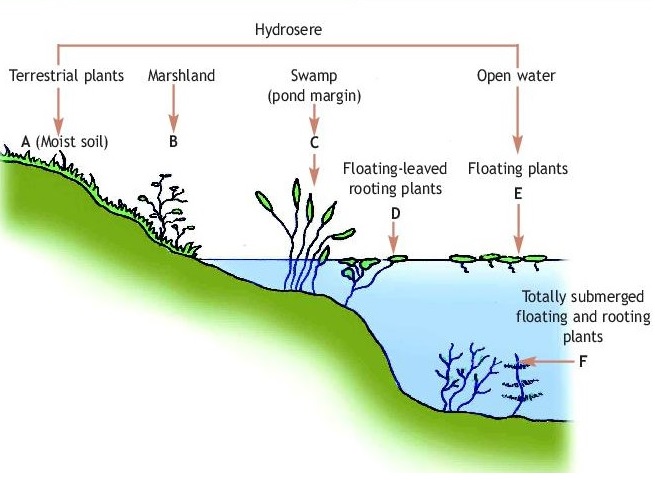
Yellow Flag Iris thrives in wet, waterlogged soils and shallow water. This makes it ideal for pond margins, ditches, and wetland planting schemes. It grows well in full sun or partial shade. It can also tolerate a wide range of soil types, including acidic and low-nutrient conditions.
Plants can be grown directly in saturated ground or planted in aquatic baskets on pond shelves. Once established, Yellow Flag Iris requires little maintenance. It also spreads slowly via rhizomes, forming dense clumps over time.
Occasional division helps manage its size and encourages healthy growth. Due to its vigorous nature, it’s best suited to larger ponds, wildlife gardens, or naturalistic settings where it can develop without crowding smaller plants.