 My Account


Description
Species Information
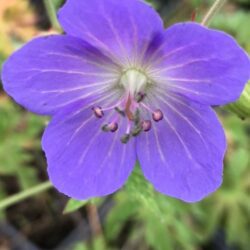
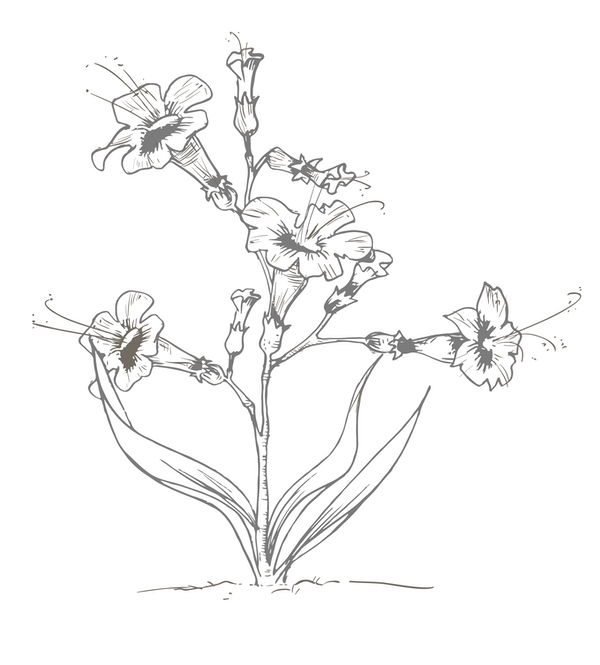
Wood Cranesbill (Geranium sylvaticum) is a hardy, native British wildflower in the Geranium family. This herbaceous perennial, also known as woodland geranium, produces violet-blue flowers with pale centres from May to July.
The plant can grow up to around 40-70 cm tall. Its deeply cut, toothed leaves add texture to garden borders. In the wild, it grows in woodlands and meadows, and its flowers attract bees and other pollinating insects.
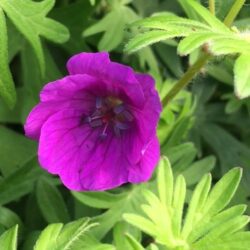
Wood Cranesbill is one of many hardy geraniums suited to wildlife-friendly gardens. Another native species to consider is Bloody Cranesbill (Geranium sanguineum), which produces bright pink flowers. Wood Cranesbill looks at home in woodland borders, wildflower meadows, and cottage gardens.
How to Identify
Wood Cranesbill has upright stems and deeply cut, toothed leaves. Its basal leaves are divided into several lobes, giving the foliage a distinctive shape. The plant loses its leaves in autumn.
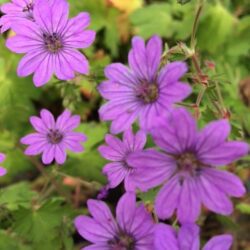
Its violet-blue flowers have five petals and a pale centre. They grow in clusters from late spring to summer, making wood cranesbill an attractive midsummer flower. After flowering, it forms pointed seed pods, which give cranesbills their common name.
How to Grow
Wood Cranesbill grows well in full sun or partial shade. It prefers moist, well-drained soil but can also grow in chalk, clay, loam and sandy soils. It tolerates cold UK winters. Wood Cranesbill is a useful choice for wildlife-friendly gardens. Its flowers provide food for bees and other pollinating insects.
Plant in woodland borders, wildflower meadows, hay meadows, or beneath roses and shrubs. Once established, it needs little care. Avoid planting it in soil that stays waterlogged. After flowering, cut back the old stems and leaves to encourage fresh growth. Check the foliage now and then for pests, including geranium sawfly.
💡 Did You Know?
Wood cranesbill is the city flower of Sheffield. Its flowers were traditionally used to make a blue-grey dye for war cloaks in ancient Europe, where people believed the colour offered protection in battle. This led to the plant being known as “Odin’s Grace”.