
Description
Species Information
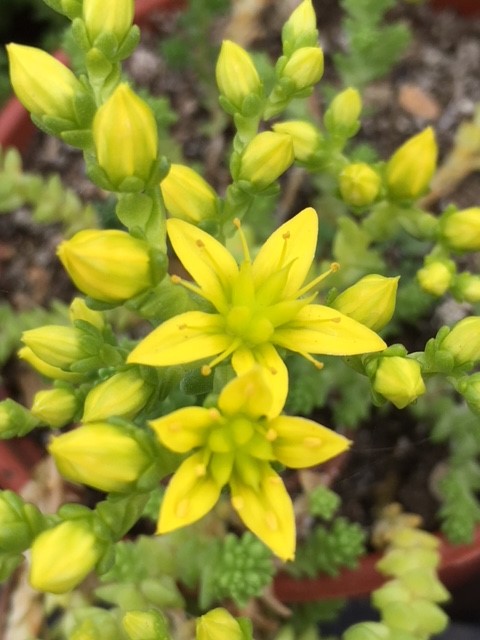
Biting stonecrop (Sedum acre), also known as goldmoss stonecrop, mossy stonecrop, goldmoss sedum, and wallpepper, is a dense, low-growing native wildflower that forms a tight, mat-like ground cover. Its common name “goldmoss” comes from its bright yellow flowers and spreading, moss-like habit. This hardy plant is specially adapted to dry, well-drained soils and thrives in places where many other plants struggle.
It is commonly found in coastal areas, on sand dunes, shingle beaches, seashore rocks, limestone grasslands, roadside verges, and rocky habitats. Biting stonecrop is also a familiar sight in towns and gardens, where it grows happily on stone walls, dry banks, containers, and even green roofs. The flowers are rich in nectar and highly attractive to bees and other pollinating insects.
How to Identify
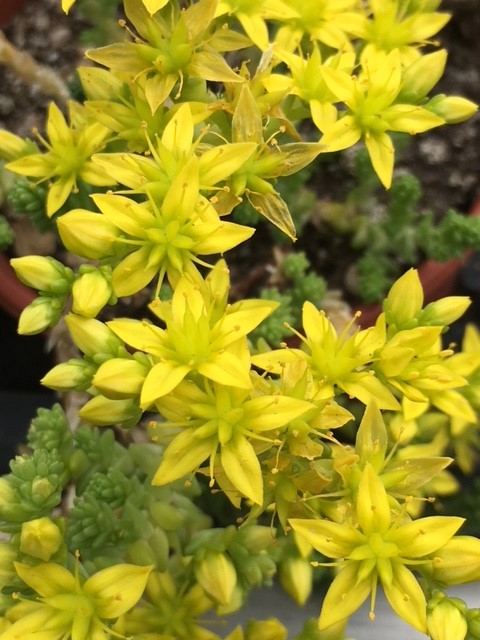
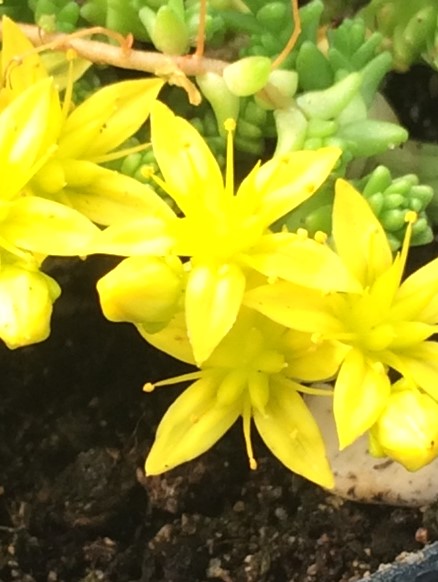
Biting stonecrop is easy to recognise thanks to its clusters of small, star-shaped yellow flowers, which appear from May to July. These bright blooms sit above dense mats of fleshy, egg-shaped succulent leaves that remain green throughout the year.
The plant grows very low to the ground, reaching a height of up to 10cm. Its tightly packed leaves and creeping habit give it a distinctive, carpet-like appearance. As the name suggests, the leaves have a sharp, biting taste, which helps to deter grazing animals.
How to Grow
This tough and reliable plant grows best in full sun and well-drained soil. It is ideal for dry, sandy, or rocky areas, and will happily establish in the thinnest of soils. Biting stonecrop is perfect for rock gardens, gravel areas, drystone walls, and container planting.
It is shallow-rooted and spreads easily, making it excellent for ground cover while still being simple to control. Once established, it requires very little care and is highly drought-tolerant, making it an ideal choice for low-maintenance and wildlife-friendly planting schemes.