
Description
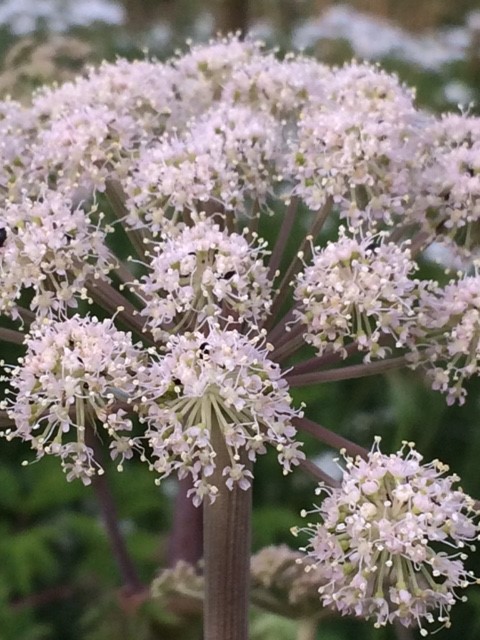
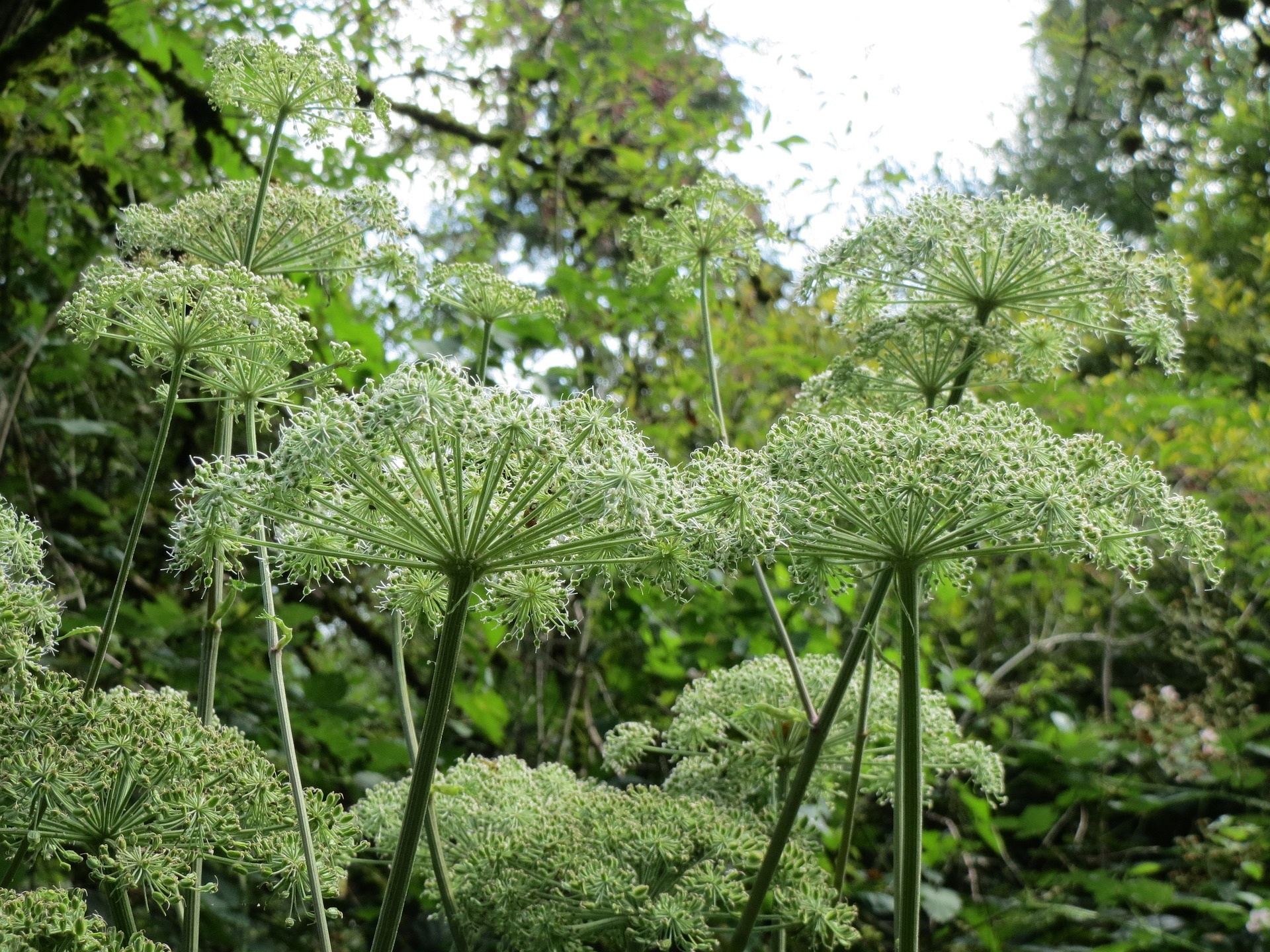
Wild angelica (Angelica sylvestris) is a UK native perennial commonly found in wet meadows, ditches, riverbanks, and wet woodland edges. A member of the carrot family (Apiaceae), it produces tall stems topped with broad, umbrella-like flower heads from July to September. The flowers are typically pale pink to purple-tinged and are highly attractive to bees, hoverflies and other pollinating insects.
When in bloom, wild angelica gives off a light, aromatic scent similar to cultivated garden angelica, which is traditionally used to make sweet cake decorations.
How to Identify
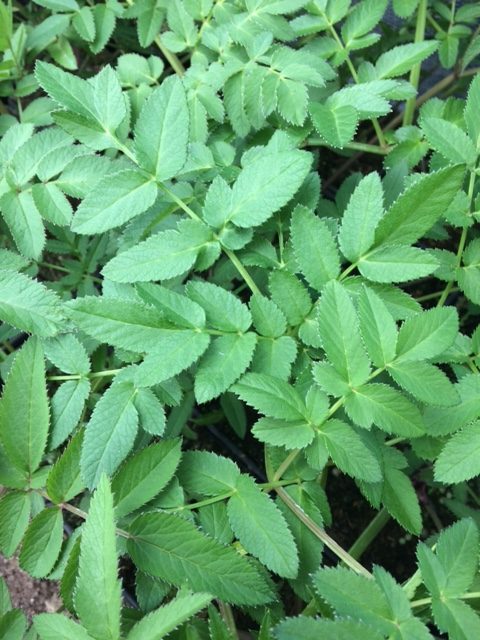
Wild angelica is a tall, upright perennial that can reach up to 1.5 metres in height. It has hollow, often flushed purple stems and large, divided leaves with softly toothed edges, giving the plant a light, airy appearance.
From mid to late summer, it produces large domed umbels made up of many small flowers, usually pale pink to mauve or lilac in colour. These flower heads are broader and less tightly packed than those of similar species such as cow parsley. After flowering, rounded seed heads form and gradually turn brown as they mature. When crushed, the foliage releases a gentle, aromatic scent.
How to Grow
Wild angelica thrives in moist, fertile soils and is best suited to damp meadows, pond margins, rain gardens or naturalistic planting schemes. It prefers full sun to partial shade and copes well with areas that experience occasional waterlogging.
Plants can be grown from seed sown in autumn or early spring, or introduced as young plants into prepared ground. Keep the soil consistently moist during establishment, particularly in drier periods.
Once established, wild angelica requires very little maintenance and will often self-seed gently, helping it to naturalise over time. Leaving seed heads standing through autumn also provides structure in the landscape and supports wildlife.