
Description
Species Information
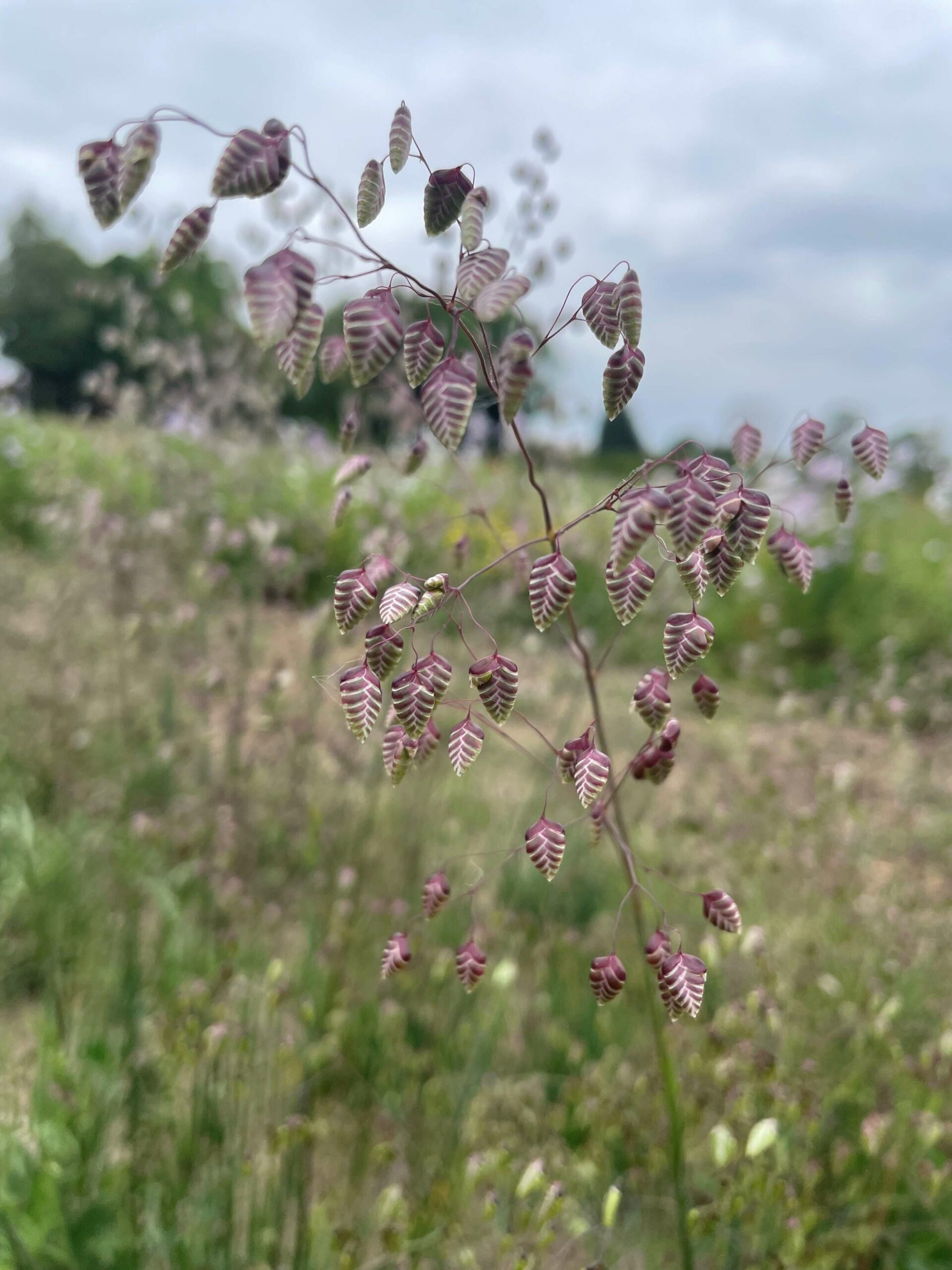
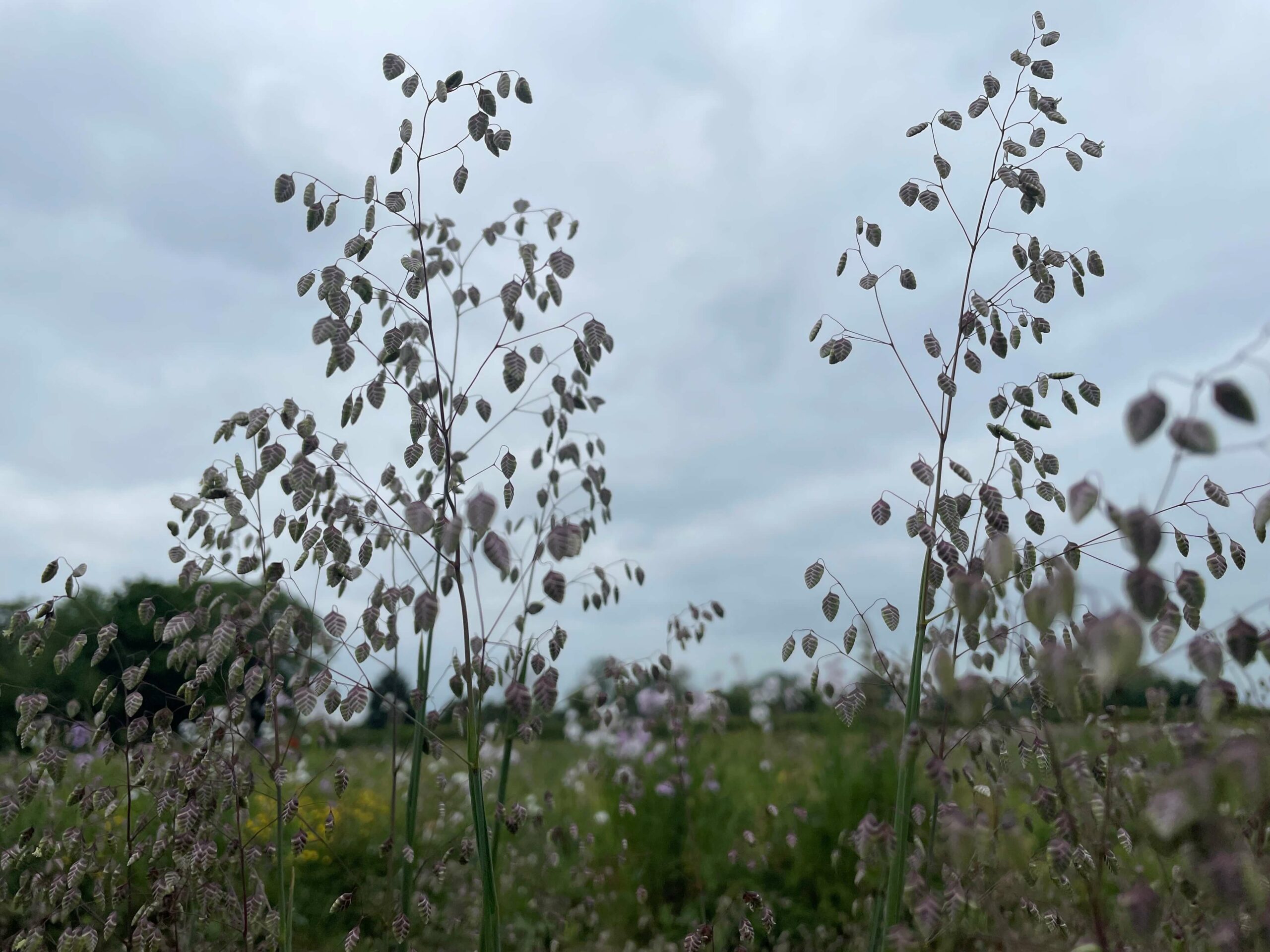
Quaking grass (Briza media) gets its name because the flower spikelets and seed heads shake on their stalks in the slightest breeze. The loose heads of quaking-grass are a distinctive feature of meadows and grasslands, particularly those on chalky soils, and can resemble dead leaves to the untrained eye. Its small, heart-shaped flower heads dance on delicate stems from June to September, giving the plant many different common names, including ‘Totter Grass‘, ‘Dithery Dock‘, ‘Wigwams‘, and ‘Toddling Grass‘.
How to Identify
Quaking grass produces loose sprays of nodding flower heads made up of flattened flower spikelets, each shaped like a small heart. These hang from wiry flower stems and tremble in even the lightest breeze. The seed heads emerge green, maturing to silvery-purple and pale straw tones as the season progresses. Plants are lightly tufted and relatively low-growing, making them easy to spot among other meadow grasses.
How to Grow
Quaking grass grows best in dappled shade or full sun in poor soil types. It’s ideal for wildflower gardens, meadow planting schemes, and flower borders where a natural look is desired.
This species prefers low-fertility soils and should be sown sparingly in single-species wildflower seed or meadow mixes to prevent it from being outcompeted. Once established, Briza media is low-maintenance, returning each year to add movement, texture and seasonal interest.