 My Account


Description
Whitebeam (Sorbus aria) is a compact, deciduous tree with a naturally domed crown, making it a popular ornamental tree for parks, gardens, and avenues. Although now rarely found growing wild, it remains highly valued for its year-round visual interest and wildlife benefits.
In spring, fresh foliage emerges with a distinctive silvery-white sheen, followed by softly scented white flowers in May. By autumn, the leaves turn warm golden tones, contrasting beautifully with clusters of red berries. When over-ripe, these berries have traditionally been used to make jelly, often served with game such as venison.
The flowers support pollinating insects, while the berries are a welcome food source for birds. Whitebeam foliage also provides food for several moth caterpillars, including Parornix scoticella, Phyllonorycter corylifoliella, and Phyllonorycter sorbi.
How To Identify
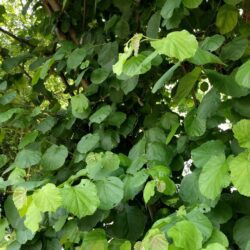
Whitebeam trees have thick, oval leaves with irregularly toothed edges and short leaf stalks. The undersides are covered in dense, white, felt-like hairs, giving the tree its name. Young leaves can resemble unfolding magnolia flowers before maturing and fading to rich russet shades in autumn.
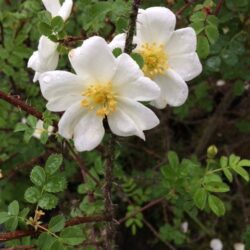
Green, pointed buds appear in spring, followed by clusters of five-petalled white scented flowers. These develop into bright scarlet berries that ripen from late summer into autumn.
How to Grow
Whitebeam trees are a resilient, low-maintenance tree that performs well in a wide range of soils, including acid soils, chalk, and dry limestone. Sorbus aria prefers a sunny position and is well suited to urban environments, open landscapes, and exposed sites, where it will establish steadily and maintain a neat, compact form.
If using in as hedge: All species in a wildlife hedge can be cut back or “Coppiced” without harm. In the 1st year after establishment the hedge can be cut back to stimulate growth of the hedge from the base thereafter cut every 2-3 years. If the weather is unsuitable for planting or receiving the hedging, dig a hole and bury the roots of the bunched plants, they can be held like that till planting. After planting it is advantageous to mulch the hedge with lawn mowing or leaf mould to suppress weeds and also be done with plastic or carpet cuts and covered with soil.