
Description
Hop / Common hops (Humulus lupulus) is a hardy, fast-growing, perennial herbaceous plant native to the UK and widely found across mainland Europe and North America. In the wild, it is most commonly seen rambling through woodland margins, field edges, hedgerows, riparian habitats and waste ground, where it climbs vigorously through surrounding vegetation using its spiralling growth habit.
As a long-lived perennial, Humulus lupulus dies back to ground level each winter before producing fresh shoots each spring, often over many growing seasons. Individual hop plants can live for up to 20 years. The plant is dioecious, meaning male flowers and female flowers grow on separate plants.
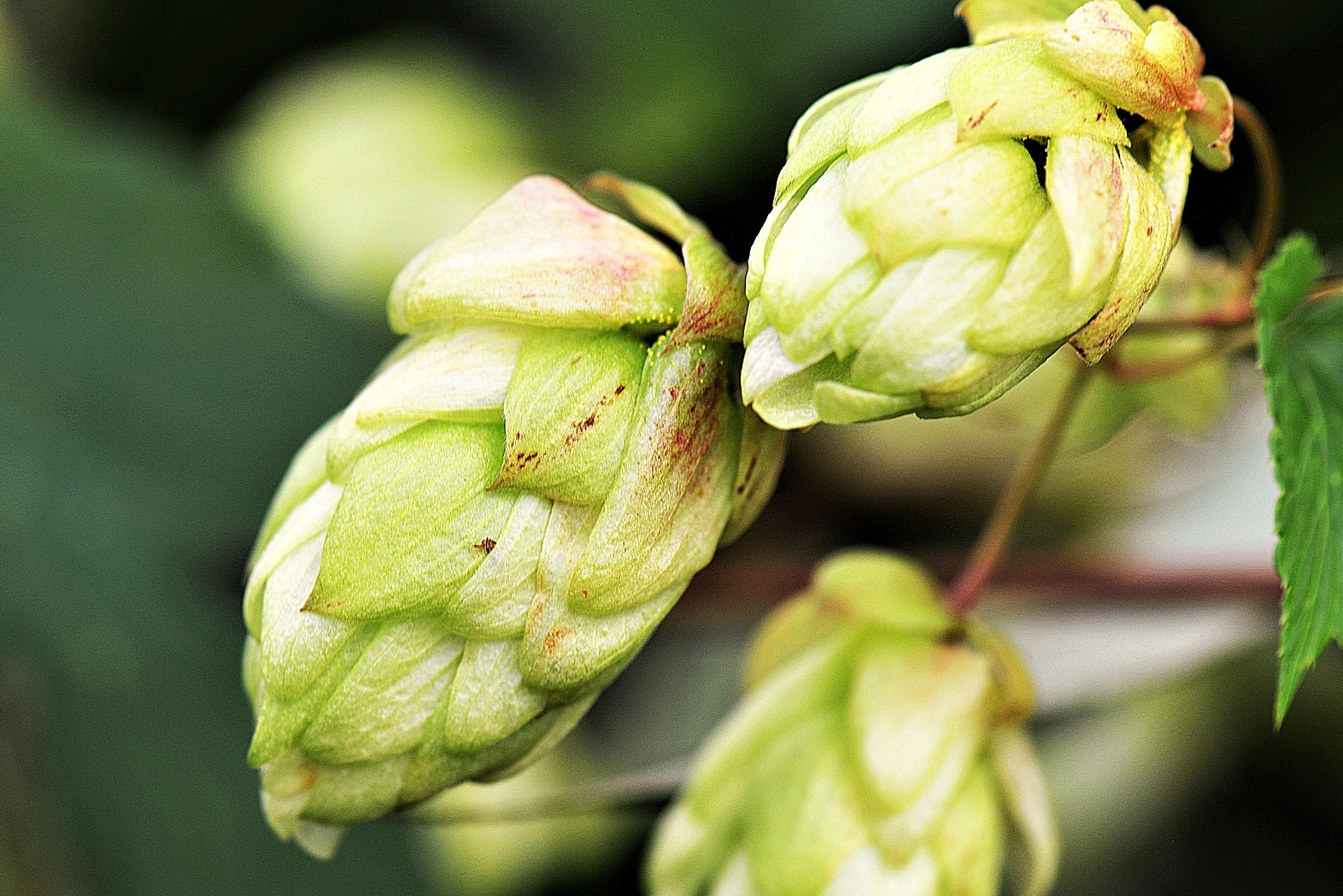
The female cone-shaped flowers, commonly known as hops, are essential to the brewing industry. These cones contain lupulin-secreting glands rich in alpha acids and essential oils, which provide beer with its characteristic bitter flavour, aroma, and preservative qualities. During brewing beer, alpha acids are converted into iso-alpha acids, measured as International Bittering Units (IBUs). Because of this, hop plants are widely cultivated for craft brewing and the wider beer-making industry.
How to Identify
Common hops have rough, twining stems and large, nettle-like leaves with deep lobes. The leaf surface is coarse, with visible glandular dots, particularly along the leaf midrib and abaxial (underside) midrib. Leaves are arranged oppositely along the stem and grow from leaf axils.
Male flowers appear as small greenish-yellow flower clusters, while female flowers form distinctive cone-shaped catkins, often referred to as fruiting spikes. As the female cone matures, it becomes papery and aromatic, turning pale green before drying to a light brown when ripe. These cones contain the fragrant oils used in fermented alcoholic drinks.
How to Grow
Hop plants grow best in full sun and moist, well-drained soils, though they are tolerant of a range of soil types once established. They prefer fertile ground and benefit from regular mulching to retain moisture. Hops require strong vertical support, such as trellises, fences or wires, and are well suited to wildlife gardens, native hedges and informal planting schemes.
Although vigorous, Humulus lupulus is not considered invasive in the UK when properly managed. All top growth should be cut back in winter to encourage healthy vegetative reproduction and strong regrowth the following season.