
Description
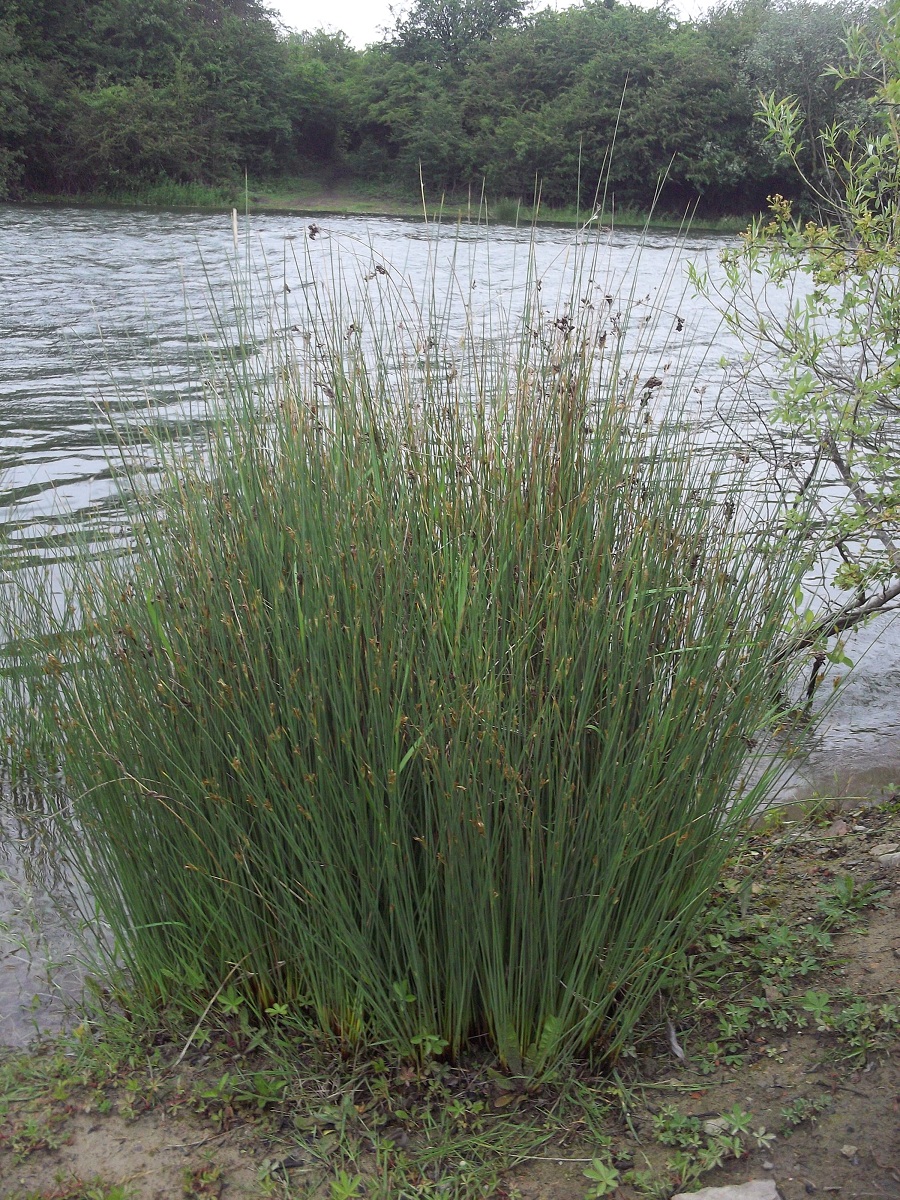
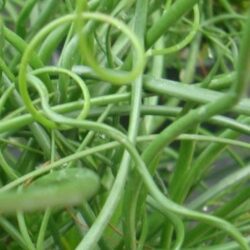
Hard rush (Juncus inflexus) is a very common native perennial found throughout England and Wales, where it occurs naturally in wetlands, dune slacks, pond margins, riversides, and damp grassland. It forms upright, architectural clumps made up of grey-green, stiff, glaucous stems that give the plant its distinctive spiky appearance.
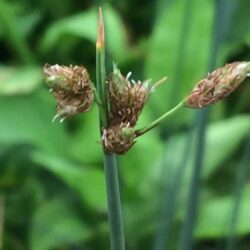
Although often described as leafless, the stems themselves carry out photosynthesis. Brown flower clusters appear from late spring to mid-summer, emerging from the side of the stem rather than the tip, a typical feature of rushes. This tough, adaptable species plays an important role in stabilising wet soil and supporting wetland ecosystems.
How to Identify
Hard rush is easily recognised by its rigid, upright, cylindrical stems, which are grey-green, slightly ridged and sharply pointed. Unlike grasses or sedges, the stems are solid rather than hollow, and true leaves are reduced to basal sheaths.
The small brown flowers are borne in compact clusters that appear to emerge from the side of the stem, giving the illusion that the stem continues beyond the flowerhead. Its dense, spiky habit helps distinguish it from softer rush species.
How to Grow
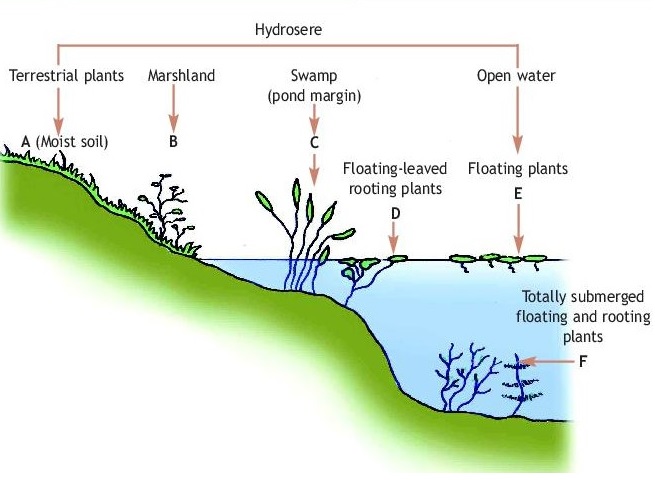
Juncus inflexus grows well in standing water up to around 15cm deep, making it suitable for pond margins, marshy areas, and shallow water, but it is equally happy in permanently moist soils that do not dry out. It prefers full sun to partial shade and tolerates a wide range of soil types.
Plants can be slow to establish, but once settled, they are very low-maintenance, spreading gradually by creeping rhizomes. This makes hard rush a reliable choice for wildlife ponds, wet meadows and naturalistic planting schemes, where it provides structure and cover without becoming invasive.