
Dog Rose

2L Pot, Bareroot

Rosa canina Grows on all but waterlogged soils to 300 cm high. Tall deciduous shrub,  Grow in full sun. Available all year round in pots, however planting between October and mid March only is strongly recommended.

Step 1: Select Product Option
Step 2: Enter Quantity
Total: £ 0.00 inc. VAT

Latin Name: Rosa canina

Common Name(s): Dog Rose

Plant Type: Perennial, Shrub

Friendly For: Bees, RHS Plants For Pollinators

Habitat: All Soils, Part Shade, Sun

Colour:

Pink

Height:

300cm

Flowering Time:

June - July

SKU: NS-MAIN-3772 Categories: , , , , ,

Description

The dog rose rosa canina, is a deciduous shrub normally ranging in height from 1–5 metres (3.3–16.4 ft), though sometimes it can scramble higher into the crowns of taller trees. Its stems are covered with small, sharp, hooked prickles, which aid it in climbing. Leaves have a delicious fragrance when bruised and sweet scented flowers which are usually pale pink, but can vary between a deep pink and white. The flesh (shells) of rose hips from dog roses contain high levels of antioxidants, mainly polyphenols and vitamin C, as well as carotenoids and vitamins B and E, along with natural sugars, organic acids, polyunsaturated fatty acids, phenolics, and essential oils, making them excellent for consumption.

In Poland, rosa canina plant petals are used to make jam, particularly suitable for filling doughnuts. In Bulgaria, where it grows in abundance, the hips are used to make a sweet wine as well as tea. The hips are used as a flavouring in Cockta, a soft drink made in Slovenia.

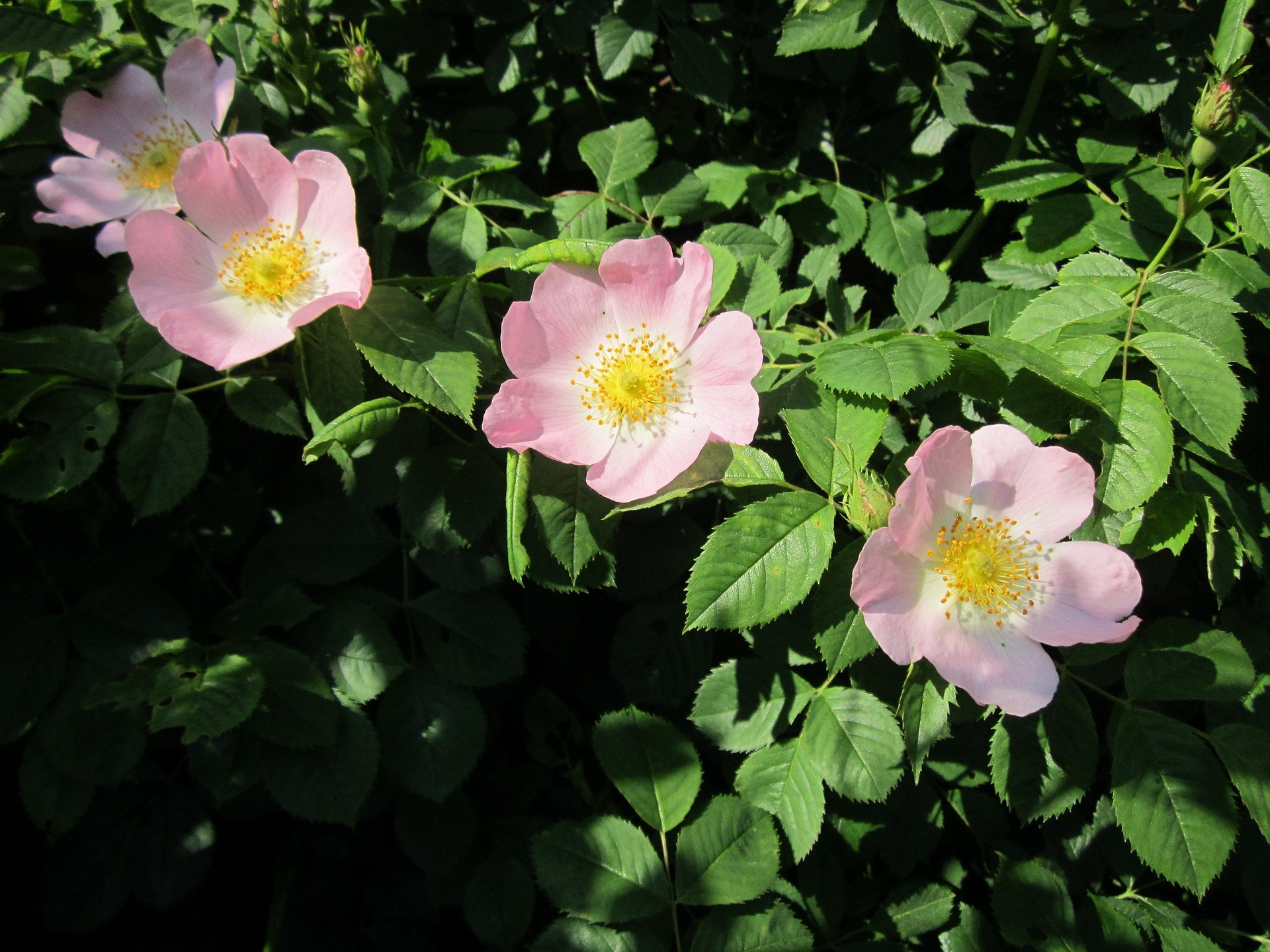
This wild rose produces beautiful light pink flowers (sometimes white flowers) and can be found across the UK along hedges and woodland edges. Growing in most soil types, the dog rose is a native species here in the UK.
Rosa Canina is an excellent choice for mixed hedges, adding visual interest and biodiversity. Its dense, thorny growth provides a natural barrier, deterring intruders and offering shelter to wildlife. The beautiful pale pink to white flowers attract pollinators, while the rose hips provide a food source for birds, making this a great plant for wildlife. The plant’s tolerance to various soil types and its native status in the UK make it a versatile and eco-friendly option for hedging. Incorporating dog rose into mixed hedges enhances the landscape with seasonal colour and ecological benefits.

Dog rose (Rosa canina) is a familiar and much-loved native, scrambling shrub, commonly found in hedgerows, woodland edges, scrub and grassland across the UK. From late spring into summer, it adorns the countryside with its pale pink (occasionally white) five-petalled flowers, followed in autumn by striking red rose hips.

Rather than climbing, dog rose uses its long arching stems and curved, hooked prickles to cling to neighbouring shrubs and trees, allowing it to reach between 1 and 5 metres in height, and sometimes higher when supported.

Dog rose flowers are an important nectar source for pollinating insects, while the bright red rose hips provide valuable food for birds such as blackbirds, redwings, and waxwings. The hips are naturally high in vitamin C and were traditionally used to make syrups to help boost levels. Rose-hip oil is also widely used in skincare, valued for its nourishing properties. The fine hairs found inside the hips are an irritant and were once commonly collected to make itching powder.

How to identify

Dog rose has slender, arching stems armed with small, sharp, hooked spines that help it scramble through hedgerows. Its leaves grow alternately along the stem and are divided into pairs of toothed leaflets, typically five to seven per leaf.

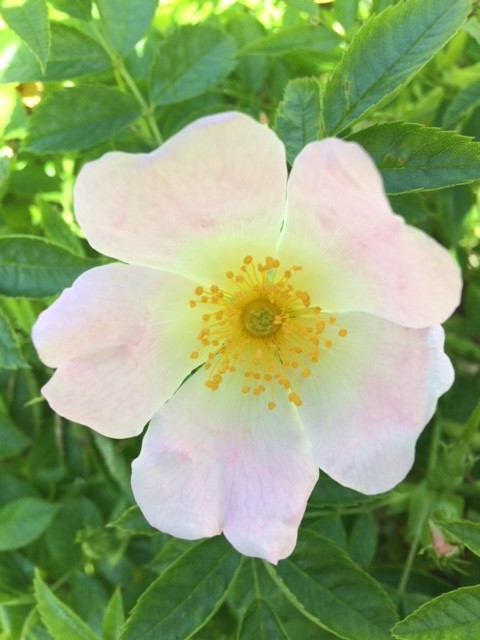
Dog rose flowers from May to August, each with five soft pink or white petals and a cluster of yellow stamens, giving off a light, sweet scent. By autumn, these develop into smooth, oval bright red rose hips, usually in small clusters. Leaf buds are sometimes affected by a distinctive red, fibrous gall known as robin’s pincushion.

How to grow

Dog rose is hardy and easy to grow, thriving in full sun or partial shade. It prefers well-drained soil but tolerates a wide range of conditions, including heavier soils, making it ideal for hedgerows, wildlife gardens and naturalistic planting schemes. Once established, it requires very little maintenance, though occasional pruning can help manage its spread.

Additional information

Option

,

Plant Type

,

Country of Origin

GB

Flowering Time

June, July

Colour

Friendly For

,

Habitat

, ,