
Common Buckthorn

Bareroot

Rhamnus cathartica. Bareroot trees of about 60-80cm in height. UK Provenance

Dispatched November-March 2026/2027


Out of Stock
Would you like us to let you know when it’s back in stock?
Error:

Out of stock

Latin Name: Rhamnus cathartica

Common Name(s): Common Buckthorn, Purging Buckthorn

Plant Type: Perennial, Shrub, Tree

Friendly For: Bees, RHS Plants For Pollinators

Habitat: All Soils, Part Shade, Sun, Well Drained

Colour:

Green, Yellow

Flowering Time:

April - June

SKU: NS-117 Categories: ,

Description

Common buckthorn (Rhamnus cathartica), also known as purging buckthorn, is a deciduous shrub or small tree native to England, Wales, and areas of Europe. Its common name comes from the strong laxative effect of its berries, which were historically used in medicine.

Rhamnus cathartica is recognised by its grey-brown bark and thorn-tipped shoots. While the seeds and leaves are mildly poisonous to people and livestock, the berries are an important food source for birds and are readily eaten. Although widespread across Europe, common buckthorn is classed as an invasive species in North America, as its dense growth crowds out native plants.

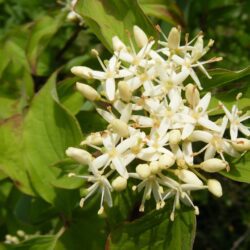
Common buckthorn typically grows to around 6-10 metres in height. It flowers in spring, producing small yellowish-green flowers, followed by red berries that ripen to black in autumn.

How to Identify

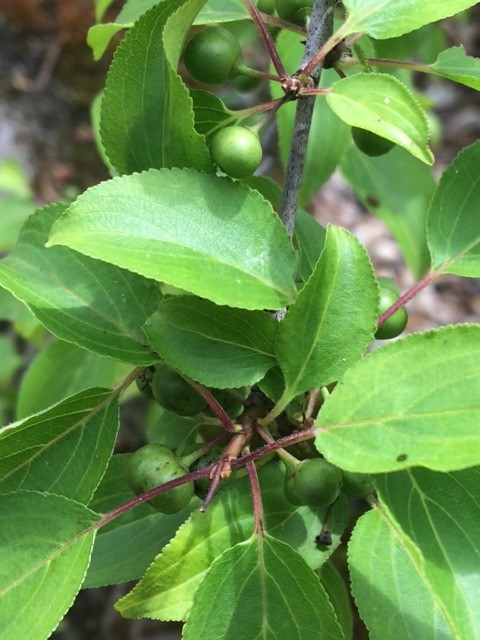
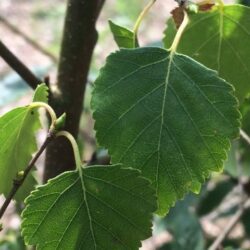
Common buckthorn can be identified by its dark green leaves, which are usually arranged opposite one another along the twigs. Each leaf has 3 to 5 pairs of distinctive curved veins that arch towards the tip.

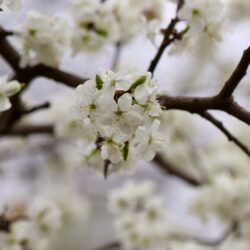
In winter, when the plant is bare, it is identifiable by its thorny twigs and elongated, scaly buds that sit close to the stem. The spring flowers are subtle but attractive to pollinating insects, such as the brimstone butterfly, while the glossy black berries later in the year are an important food source for birds, which disperse the seeds naturally.

How to Grow

Common buckthorn grows well in a range of soils, including chalky, clay and loamy ground, provided drainage is reasonable. It prefers full sun or partial shade and is well-suited to hedgerows, woodland edges and wildlife planting schemes.

Once established, it is hardy and low maintenance. It can be coppiced or lightly pruned if required, making it suitable for mixed wildlife hedges. Due to its toxic berries, purging buckthorn is best planted away from areas grazed by livestock or used by children.

Additional information

Option

Habitat

, , ,

Plant Type

, ,

Country of Origin

GB

Flowering Time

April, May, June

Colour

,

Friendly For

,