
Description
Downy birch (Betula pubescens) is a slender, deciduous tree recognised for its fine branching structure and pale, softly textured white bark. Native across much of the UK, it is commonly found in heathlands, moorlands, wetlands, and upland areas, where it can reach mature heights of up to 30 metres.
Also known as European white birch, downy birch has a more upright form than silver birch (Betula pendula). Its bark is typically duller and browner in tone, with visible horizontal markings and lacking the strongly papery quality seen in silver birch. While the two species readily hybridise, they can be distinguished by their shoots: downy birch has soft, hairy young growth, whereas silver birch shoots are hairless and warty.
Downy birch produces abundant seed, which is an important food source for small seed-eating birds, and it supports a wide range of insect species, making it a valuable addition to wildlife-friendly planting schemes.
How To Identify
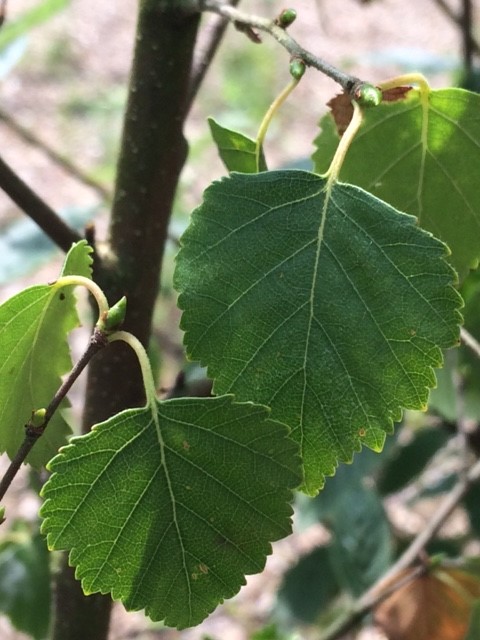
Leaves are triangular but noticeably rounder at the base than those of the silver birch. Leaf stalks and young shoots are covered in fine, downy hairs. Downy birch is monoecious, with both male and female catkins borne on the same tree.
From April to May, long, yellow-brown male catkins hang in small groups from the shoot tips, while the female catkins are shorter, upright, and bright green. After wind pollination, female catkins darken and release large quantities of tiny seeds in autumn, which are dispersed by the wind.
How to Grow
Betula pubescens prefers damp soils and is particularly well suited to wetter ground, clay soils, and areas with higher rainfall, which explains its greater prevalence in western parts of the UK. Despite this preference, it is a hardy and adaptable species that will tolerate a wide range of soil conditions.
Ideal for parkland, estates, and naturalistic planting, downy birch works especially well in woodland-edge settings, where it contributes height, movement, and seasonal interest.
If using in as hedge: All species in a wildlife hedge can be cut back or “Coppiced” without harm. In the 1st year after establishment the hedge can be cut back to stimulate growth of the hedge from the base thereafter cut every 2-3 years. If the weather is unsuitable for planting or receiving the hedging, dig a hole and bury the roots of the bunched plants, they can be held like that till planting. After planting it is advantageous to mulch the hedge with lawn mowing or leaf mould to suppress weeds and also be done with plastic or carpet cuts and covered with soil.