
Description
Also spelt “medic” or “meddick”, the plant is known by a number of alternate names, including nonesuch, black nonesuch, black medic clover, hop clover, hop medic, black clover, black hay, blackweed, English trefoil, hop trefoil, and yellow trefoil. It is an annual or short-lived perennial plant, growing each year from adventitious buds on the root. Black medick is a good source of nectar for bees to use to make honey.
It is frequently found in natural pastures and may be planted in order to create artificial meadows, especially on dry land. The presence of black medick in large concentrations as a lawn weed may indicate that the soil is poor in nitrogen. However, because black medick and other clovers fix nitrogen in the soil, this deficiency can improve over time due to the presence of these plants.
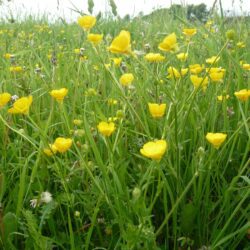
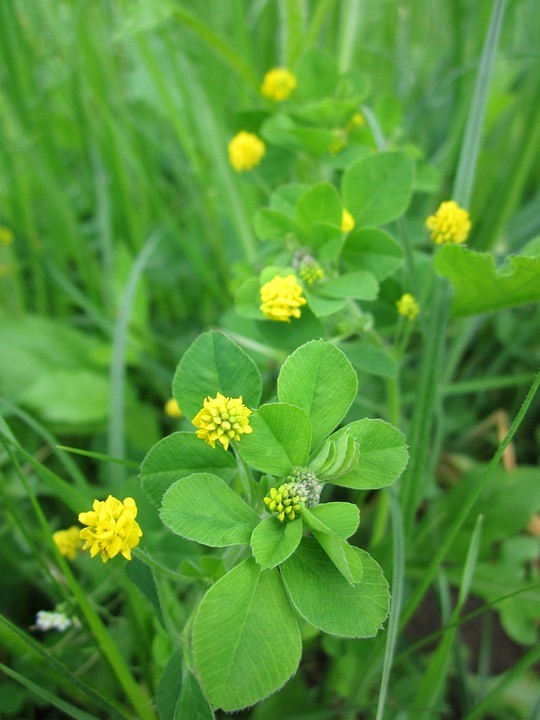
Black Medick (Medicago lupulina) is an annual or short-lived perennial with a deep tap root, sprawling stems that become mat-like in mown grass, and small, clover-like leaves. Small, yellow flowers bloom from mid-spring to early autumn, and are followed by black seed pods.
How to Identify
Black Medick forms creeping, mat-like growth, especially in mown grass or open ground. It has small, clover-like leaves made up of three leaflets and produces clusters of tiny, bright yellow, pea-like flowers from mid-spring to early autumn. After flowering, these develop into distinctive curled, black pods, which give the plant its common name.
How to Grow
Sow Black Medick (Medicago lupulina) in spring or early autumn on well-prepared, weed-free soil. Scatter seed thinly, lightly rake in, and keep moist until established.
It grows best in full sun and adapts to moist but well-drained soils. Once established, it is drought-tolerant and low-maintenance. As a nitrogen-fixing legume, it helps improve soil fertility and works well in green manure mixes or as an undersowing crop.
Small yellow flowers appear from mid-spring to early autumn, attracting bees and pollinating insects. Plants can be lightly mowed to encourage dense growth and will often self-seed naturally.