
Description
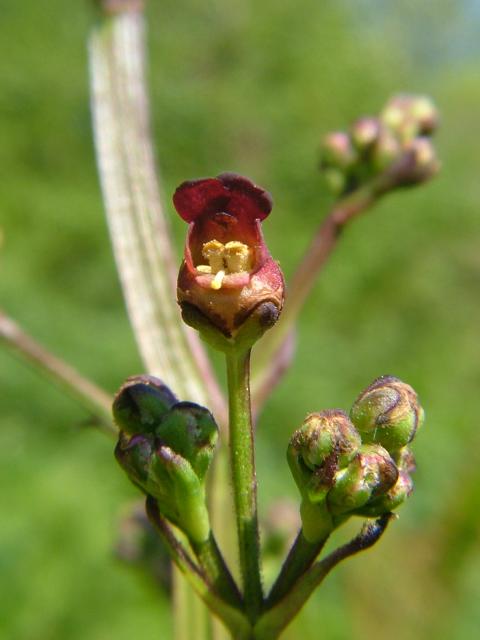
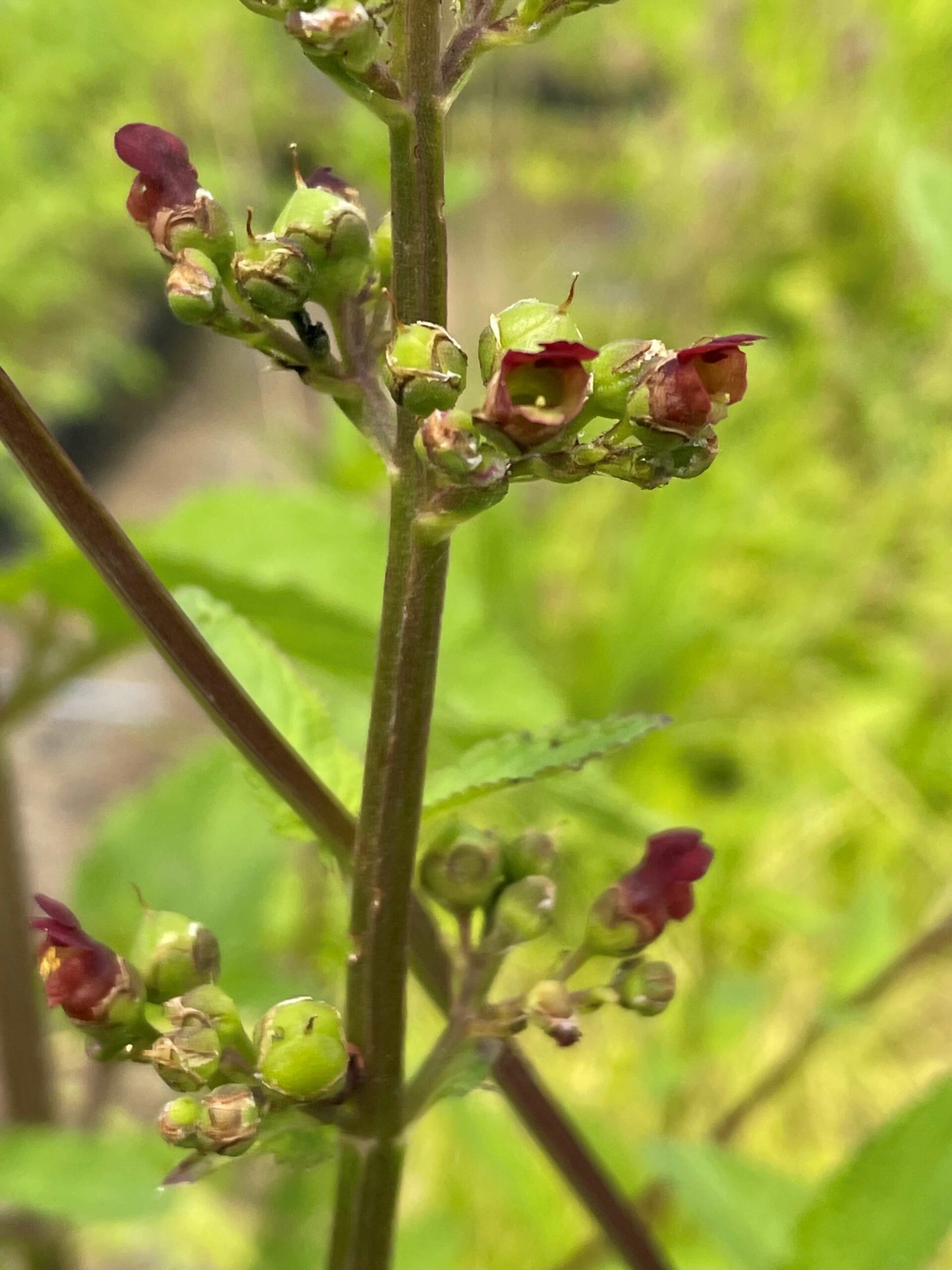
Water figwort (Scrophularia auriculata), also known as water betony and common figwort, is a British native marginal wildflower found along pond edges, riverbanks, damp meadows and wet woodlands. Flowering from June to September, it produces deep maroon flowers that are an important nectar source for insects.
Water figwort is a popular plant for pollinating insects, primarily by common wasps and bumblebees. Growing to around 1 metre tall, it is a robust, wildlife-friendly plant with a common conservation status across much of the UK, though it is scarcer in Scotland.
How to identify
Water figwort is recognised by its square stems and oval, wrinkled, dark green leaves with toothed edges. The flowers are deep maroon, two-lipped in shape, and sit among conspicuous green sepals with brownish margins. Blooms are carried in loose whorls along branching stems, giving the plant a slightly untidy but natural appearance that suits wild planting schemes.
How to grow
This species thrives in moist to waterlogged soils, tolerating both neutral and calcareous conditions. It performs best in full sun to partial shade and is ideal for planting at pond margins, along streams, or in bog gardens.
Water figwort can be planted directly into damp ground or grown in aquatic baskets to control spread. Low maintenance and winter hardy, it establishes well and provides valuable structure and resting places for aquatic insects, supporting healthy pond and wetland ecosystems.