
Description
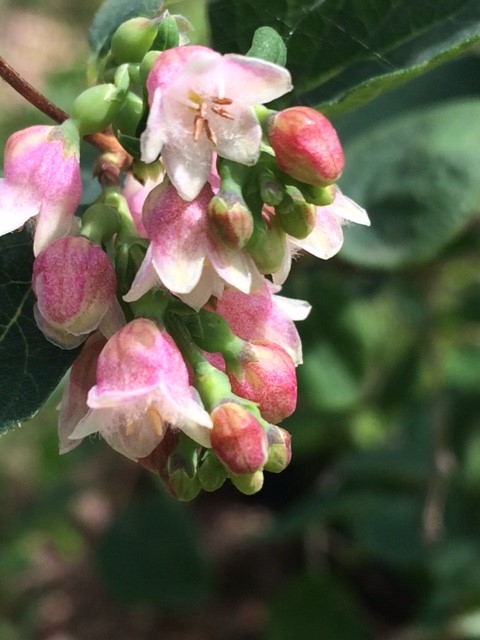
Common Snowberry (Symphoricarpos albus) is a hardy and versatile deciduous shrub, prized for its striking white berries that persist into winter, adding interest to the garden during the colder months. Delicate, bell-shaped pink flowers appear in summer, attracting bees and other pollinators before giving way to the signature fruit that makes this beautiful landscaping plant so distinctive.
Well-suited for a wide range of planting & soil conditions, snowberry thrives in full sun or deep shade and tolerates drought, heavy rains, poor soils, and extreme temperatures. Its dense, twiggy growth makes it ideal for ground cover, erosion control, wildlife gardens, or as a naturalistic hedge. Mature plants typically reach 1–1.5 metres in height and spread, forming a rounded shape with arching stems.
In addition to its ornamental value, snowberry is ecologically beneficial: its berries provide an important food source for birds such as quail, pheasants, and grouse during the winter months. However, the berries are mildly toxic to humans and pets if ingested, so caution is advised in areas where children or animals may be present.
Snowberry grows well in most soil types, including clay, loam, and sandy soils, and tolerates a range of pH levels. It spreads via suckers, which can help form a thicket over time—ideal for wildlife habitats or natural screens, though periodic pruning may be needed to keep it in check.
If using in as a hedge: All species in a wildlife hedge can be cut back or “Coppiced” without harm. In the 1st year after establishment, the hedge can be cut back to stimulate growth of the hedge from the base thereafter cut every 2-3 years. If the weather is unsuitable for planting or receiving the hedging, dig a hole and bury the roots of the bunched plants; they can be held like that till planting. After planting, it is advantageous to mulch the hedge with lawn mowing or leaf mould to suppress weeds and also be done with plastic or carpet cuts and covered with soil.