
Description
Species Information
Black poplar (Populus nigra subsp. betulifolia) is a striking deciduous tree native to north-west Europe and is considered one of Britain’s rarest trees. Once widespread, it has declined significantly and is now most commonly found in parts of Shropshire, Cheshire, Somerset and East Anglia, particularly along river valleys and floodplains.
Mature black poplars can grow up to 30 metres tall and may live for over 200 years. The bark is dark brown to almost black, becoming deeply fissured with age and often forming distinctive burrs. Black poplar is a pioneer species, characterised by rapid early growth and an ability to colonise open, low-lying ground.
The species is dioecious, meaning male and female flowers grow on separate trees. In spring, male trees produce deep red catkins, while female trees bear green catkins that later develop into cottony, wind-dispersed seed heads in early summer.
How to Identify
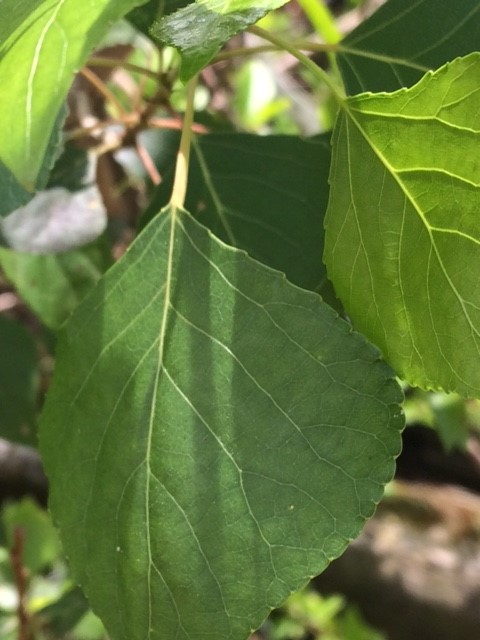
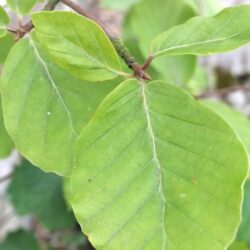
Black poplar leaves are shiny green and broadly heart-shaped, with long pointed tips and finely toothed edges. When young, the leaves are softly hairy, losing these fine hairs by autumn. The foliage can carry a faint balsam-like scent, particularly in warm weather.
In spring, look for hanging catkins before the leaves fully emerge. Male catkins are red, while female catkins are yellow-green and later form fluffy seed heads. The dark, heavily fissured bark and large, spreading crown help distinguish mature trees in the landscape.
How to Grow
Black poplar thrives in low-lying areas with moist, fertile soils and is especially well suited to damp grounds across riverbanks, floodplains, and wet meadows. It prefers full sun and plenty of space to develop its broad crown and extensive root system. Due to its size and conservation importance, it is best planted as part of landscape-scale restoration or river corridor projects rather than small gardens.
If using it as a hedge: All species in a wildlife hedge can be cut back or “Coppiced” without harm. In the 1st year after establishment, the hedge can be cut back to stimulate growth of the hedge from the base thereafter cut every 2-3 years. If the weather is unsuitable for planting or receiving the hedging, dig a hole and bury the roots of the bunched plants; they can be held like that till planting. After planting, it is advantageous to mulch the hedge with lawn mowing or leaf mould to suppress weeds, and also to use plastic or carpet cuts and cover with soil.